
We Are Both Strangers Here
A knock on the door in a small Togolese village – and the lesson it still teaches me today.

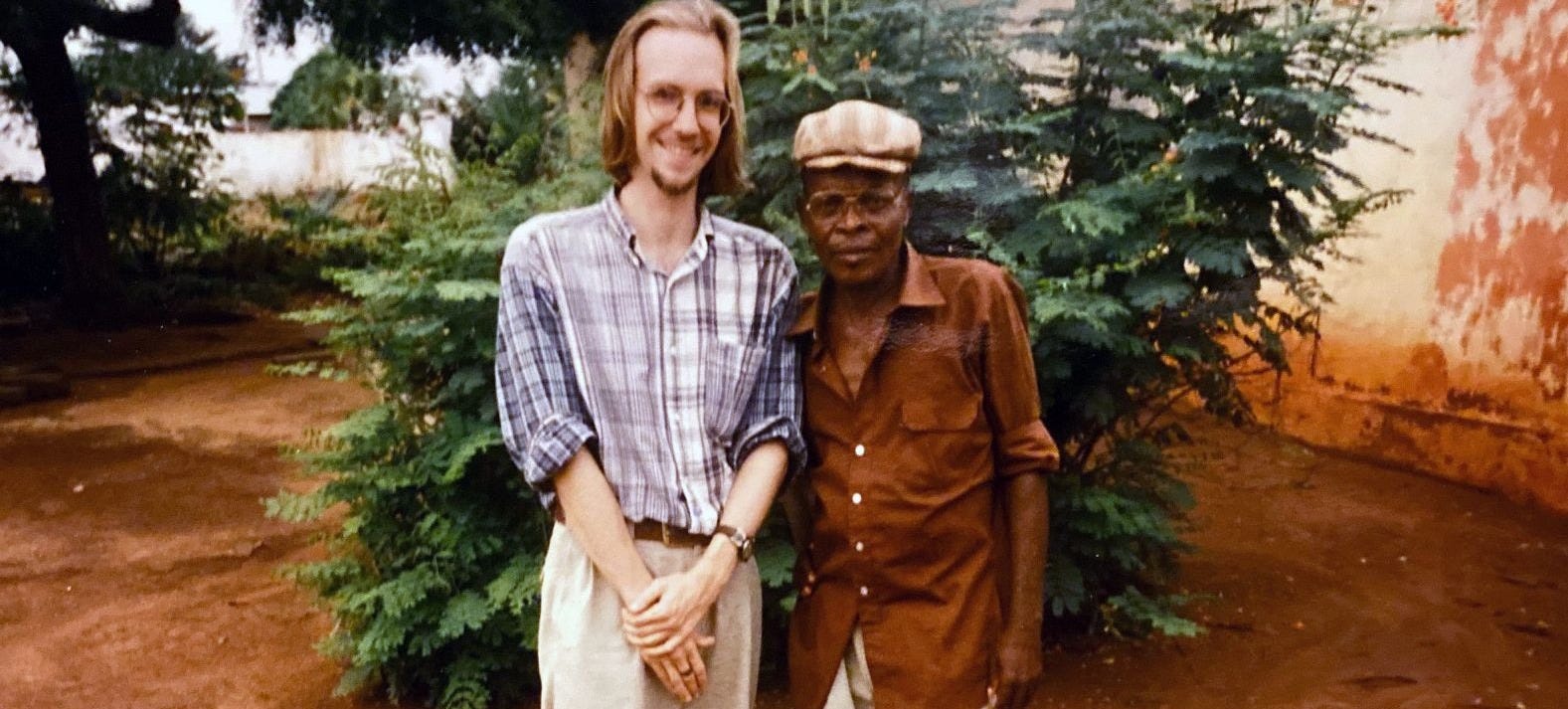
Before I boarded the plane at New York’s JFK Airport, I had only been outside the United States for five hours.
When I was 14, my dad drove us from Buffalo to Detroit through Canada on a family vacation. That was the extent of my international experience.
Now, at 23, I was stepping onto a flight bound for Lomé, Togo with a group of strangers who would soon become close friends – including the woman who would eventually become my wife. It was the beginning of the most consequential experience of my life.
After settling nervously into my seat, I pulled one of the ten music cassettes from my backpack and slid it into my Walkman. Fittingly, the song that began playing as we lifted off was “Aeroplane” from Björk’s Debut – the opening track for the rest of my life as we set off for two years of Peace Corps service.
That service changed my life in every conceivable way: personally, professionally, intellectually, and ethically. I look back on it with enduring curiosity and deep humility, and always with gratitude.
I am one of more than 240,000 Americans who have served as Peace Corps Volunteers in 144 countries since President John F. Kennedy established the agency – which marks its 65th anniversary this month.
The Peace Corps has three goals. One is practical: helping match needed skills with development challenges in partner countries. The other two focus on mutual understanding – helping people abroad better understand Americans and helping Americans better understand other peoples and cultures.
That third goal has shaped much of my life and work.
And I can point to exactly when it crystallized.
It wasn’t the instant I stepped off the plane into the swelter of the country I would soon call home. It wasn’t the moment the Peace Corps van dropped me off, after three months of intense training, in front of my tiny house in the small maritime village of Amegnran.
It was a week after I arrived in that village and, just as I was finishing a morning tea, heard a loud and very insistent knocking. I set down my mug on a small wooden table and opened my front door.
A diminutive man stood there wearing a plaid shirt and khakis, with a disarmingly earnest expression on his face. Both his physical features and demeanor seemed different from the Togolese neighbors I had already begun to meet.
“Hello, Roger,” he said.
“We are both strangers here. We must help each other.”
His words were disarming, mysterious, courageous, and clear. It remains the most unusual introduction I’ve ever experienced.
He told me his name was Felix, and that he was a farmer.
Because I had just begun my work as an agricultural extension agent, I was eager to meet potential collaborators – especially anyone interested in experimenting with agroforestry techniques. I invited Felix inside and boiled water for more tea.
Over the next hour, we had an easy but wide-ranging conversation. Felix told me he was originally from Nigeria – an Igbo man, as he proudly explained – who had fled the violence and starvation of the Biafra War. Over the following years, he moved through neighboring Benin in search of work and stability.
Eventually, in western Benin, he met a local woman. They married and had three sons before later moving to Togo around 1990, when the country was experiencing a modest economic boom.
But that stability didn’t last. Currency devaluation and political unrest soon struck Togo, and Felix found himself making ends meet as a sharecropper and seasonal farm worker during difficult times.
Then one day he heard that a Peace Corps Volunteer – another stranger – had arrived in Amegnran.
It was the first time I had ever sat across from a refugee and listened to his story. It was unlike anything I had heard before.
Felix embodied both vulnerability and confidence in equal measure. He was wiser and far more worldly than I was. And during that very first conversation, he was already proposing ideas for how we might work together.
Over the next two years, our collaboration produced tangible results: a small chicken farm that supplied eggs to local markets, environmental education activities for village schools, and several tree nurseries.
But it was our friendship – and our conversations, often while walking along narrow jungle paths – that left the deepest impression on me.
I shared magazines that I brought back from Lomé, the capital, so that we could both peruse articles and discuss world issues. He imparted a deeply human history of the region, the pain of loss and the nature of belonging that permanently shifted my philosophy.
Like any friends, we didn’t always agree. Sometimes he told me our projects were moving too slowly. We debated many topics vigorously.
Over time, I came to understand his sense of urgency. After all, I would only be there for a couple of years. Positive change had been elusive for much of his life.
Looking back, my friendship with Felix encapsulated all three Peace Corps goals at once. But it is that mutual understanding that continues to guide my work and outlook today.
After my service ended and I returned to Kansas, I stayed in touch with him, sending letters and the occasional magazine. A few years later, I received a letter from another Togolese friend, Komi, with sad news: Felix had passed away.
Although he has been gone for many years, Felix remains present in nearly every talk I’ve given about the Peace Corps and lives on in many of the stories I write about Togo. I even wrote about him once before, years ago, in a Father’s Day reflection titled Becoming Abla.
And when I prepare to interview refugees today, I often think about sitting across that small wooden table from him.
In many ways, that first conversation taught me the most important rule of respectful storytelling: listen first.
I remember his first words to me.
After all, we are all strangers somewhere, and we all deserve understanding – and help when we need it.