
Near Slemish
From a hillside in Antrim, in the footsteps of Saint Patrick, to a meeting in Indian Territory – a family story shaped by movement, chance, and time

St. Patrick’s Day always gets me thinking about kinship. It’s easy to think about origins in simple terms – where a family comes from, what country sits at the beginning of the story, what name was carried across the ocean, and what happened next.
Each of us is a character in an unfolding narrative, shaped by twists and turns that are cinematic, to say the least.
The more I’ve looked into my own family history, the less fixed those origins feel – it becomes more like something carried and changed over time. Like a book passed down through generations, with blank pages waiting for what we will add.
In my family, one chapter begins in Ballynacaird, County Antrim, in the north of Ireland.
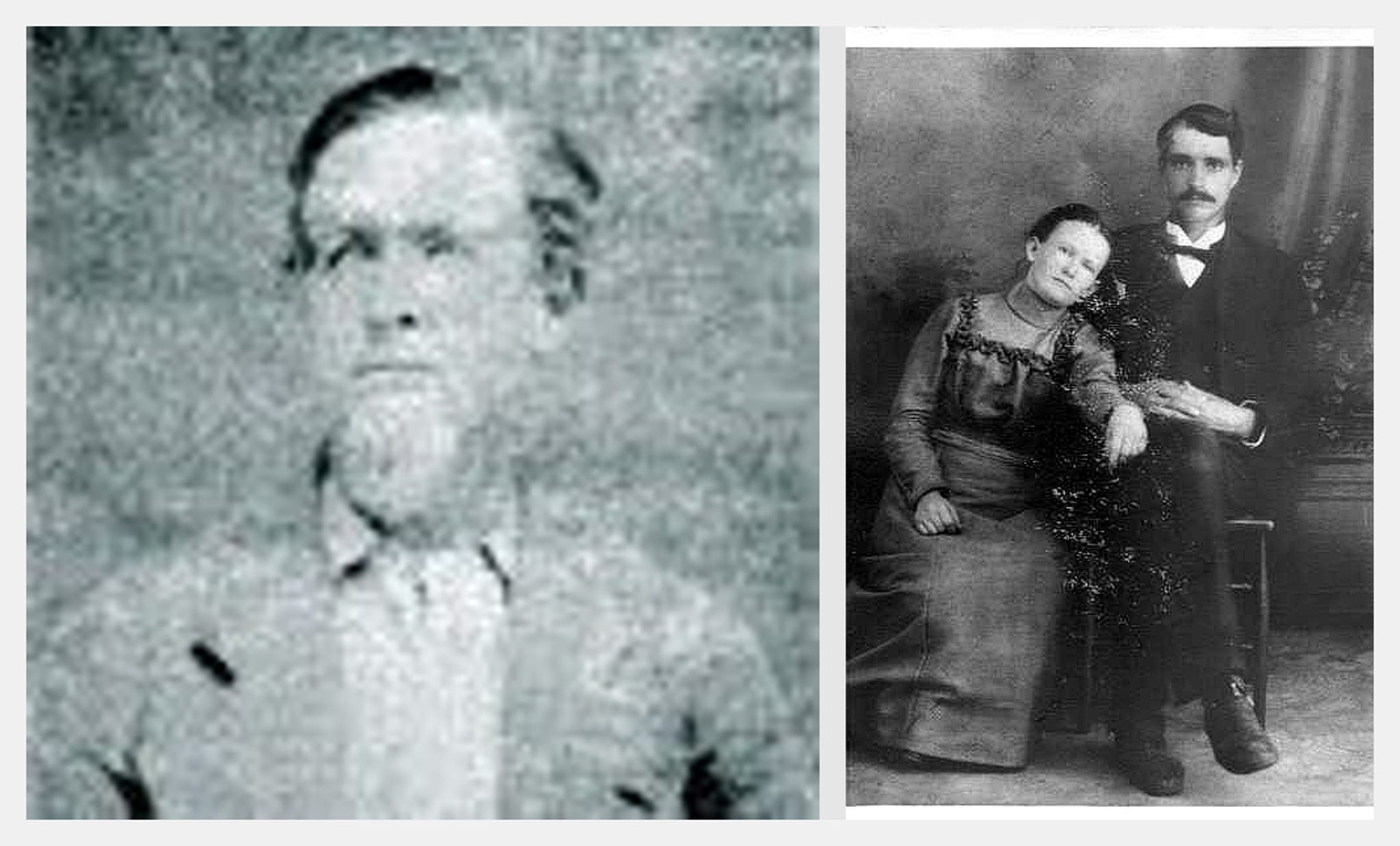
My 4th great grandfather, Jacob Shaw McComb, was born there in 1774, just a short distance from Slemish Mountain. According to tradition, that’s where Saint Patrick once tended sheep during his captivity, long before he became the Apostle of Ireland.
Family stories suggest that Jacob may have been studying theology – perhaps shaped by that same religious landscape – before leaving Ireland. That remains unclear. But records written in a family Bible spell out the next part of his journey.
He landed in Charleston on October 3, 1798, after weeks at sea, crossing first from Cork, Ireland, and then from Greenock, Scotland. It’s a simple entry, but it carries the weight of a decision that still echoes.
From there, his life unfolded across a widening map: Georgia, Missouri, and eventually Texas, where he died in 1865.
The story might have ended there – but in this case, the persistence of family connections over distance and years gave rise to new chapters.
Jacob’s granddaughter, Louisa Jane McComb, married into the Burks family of Miller County, Missouri. That family had made its way from Ireland to the American colonies in the late 1600s, then moved west through Kentucky and Tennessee into the Ozarks.
Her son – my great-grandfather, Hansford Owen Burks – would eventually make his own journey to Texas, working as a cowboy on a ranch owned by his McComb relatives. I’ve often thought about what it must have been like in the late 1800s, riding across that wide-open landscape at around twenty years old.
On his way back to Missouri, everything changed.
Hansford passed through Oklahoma, then still Indian Territory, and took a job as a deputy sheriff in the town of Welch. According to my grandparents, there was at least one gunfight. But more importantly, while he was there, he met Florence Aurelia Chandler – the daughter of a schoolmaster.
They married in 1900 and moved to Henley, Missouri, where he served as a grain miller, lay minister, postmaster, and school superintendent. They had ten children, including my grandfather.
Looking back, it’s hard not to see how far that thread had traveled. A connection that began in Ireland, carried across generations, eventually brought Hansford and Florence into the same place at the same time.
It’s easy to draw a line from one place to another – from Antrim to Charleston, from Texas to Oklahoma, from one generation to the next. But it doesn’t really feel like a line. It feels more like movement. Like work, opportunity, purpose – like the next place in a constantly unfolding story.
St. Patrick’s Day invites us to look back to locate ourselves in something older. But it also suggests something else – that what begins in one place rarely stays there.
It travels. Through people, through choices, through turns big and small.
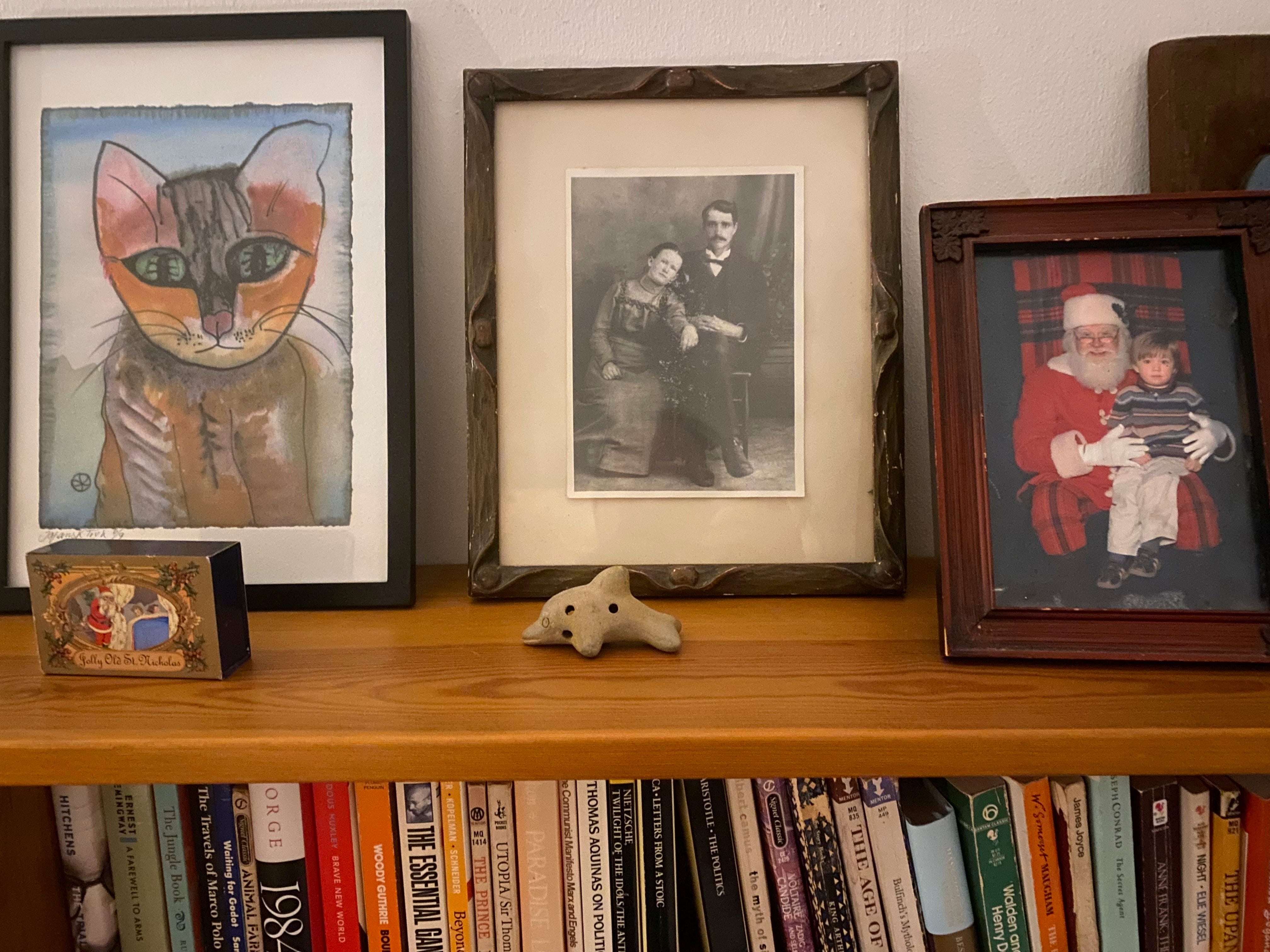
And so the wedding portrait of Hansford and Florence, which my Grandma Burks gave me as a young man, has traveled with me and my family everywhere we’ve gone. Today, it sits on a bookshelf in our apartment in Copenhagen.
I often think about the journey it holds:
A hillside in Antrim, in the footsteps of Saint Patrick.
An ocean crossing to South Carolina.
A ranch in Texas.
A road through Indian Territory.
Somewhere along the way, paths meet, and a family takes shape – ours, and countless others, in ways we rarely stop to consider.
Beautiful! Thank you for sharing Roger